
Poodle: origin, sizes, coat and daily care
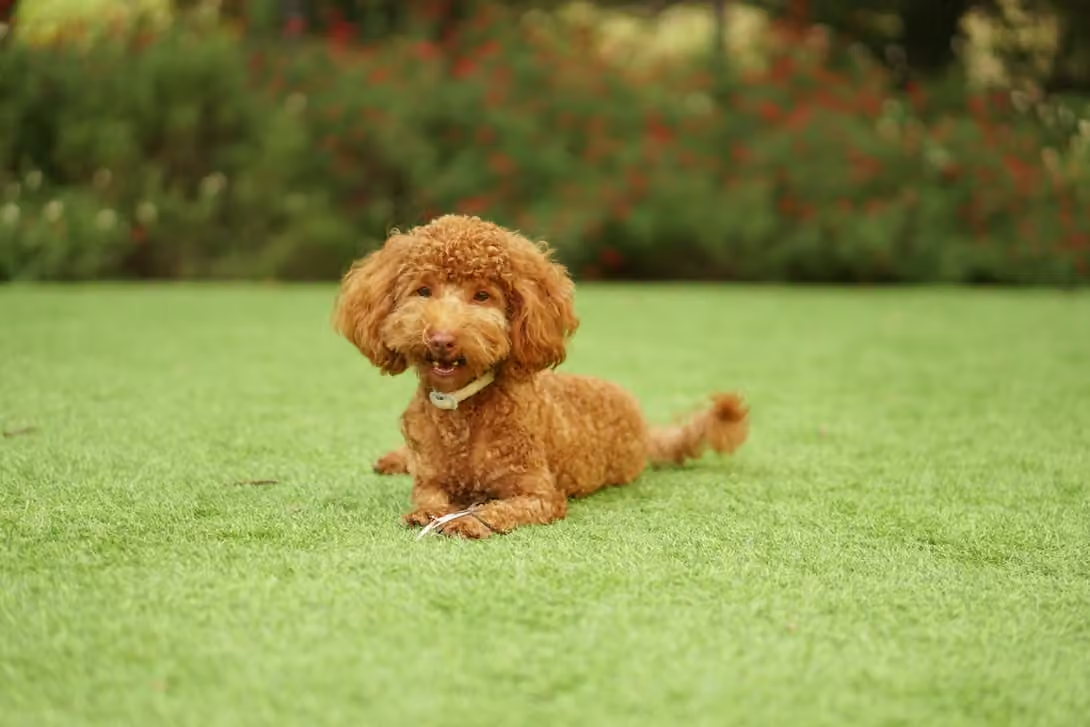
Four sizes from Toy to Standard, a coat that needs regular grooming, and exercise for body and mind every day: what to know before living with a Poodle.
Key facts
The FCI details above describe the breed standard; grooming and activity recommendations are general care guidance. Every dog is an individual.
Origin
The Poodle, known in French as the Caniche, is recognised by the FCI as a breed of French origin. Its history is closely connected with water work. According to the FCI standard, the breed descends from the Barbet and was originally used for wildfowling, retrieving ducks and other waterfowl.
Its French name reflects that history: caniche comes from cane, the French word for a female duck. In other countries, names for the breed have been associated with splashing in water. The Barbet and Poodle were gradually distinguished from one another, and breeders developed the Poodle into different sizes and colours.
Although now best known as a companion dog, the Poodle has retained many qualities associated with its working ancestry. The FCI describes the breed as loyal, capable of learning and easy to train.
Appearance
A Poodle should be harmoniously built, active and elegant, with the distinctive curly or corded coat for which the breed is known. The body is slightly longer than the dog is tall at the withers, and the head should be well defined without appearing either heavy or excessively fine.
The ears are fairly long, hang alongside the cheeks and are covered with long, wavy hair. The tail is set relatively high; under the current FCI standard, tail docking is no longer authorised. The Poodle's movement should appear light and springy.
One feature of the FCI standard is its four distinct size varieties: Toy, Miniature, Medium and Standard. Apart from size, each should retain the characteristic proportions and overall appearance of the breed. The Medium, or Moyen, variety is part of the FCI classification even though some other kennel organisations use different size classifications.
Coat and grooming
The Poodle's coat can be curly or corded. A curly coat should be profuse, fine, woolly, elastic and dense, forming even curls. A corded coat has a similarly fine and woolly texture but forms distinctive cords.
The current FCI standard recognises both solid and specified multicoloured coats. Solid colours include black, white, brown, grey and fawn, with fawn ranging from pale shades through orange-fawn or apricot to red-fawn. Recognised multicoloured varieties include several parti-coloured combinations, mantle or tuxedo patterns, black or brown with fawn markings, tricolour, brindle-and-white and brindle.
Poodle hair grows continuously and the breed sheds relatively little compared with many other dogs. This does not mean the coat takes care of itself. Loose hair can remain trapped among the curls and form mats, particularly close to the skin.
For a Poodle kept in a longer coat, thorough brushing to the skin is usually needed every day or nearly every day. Particular attention should be paid to areas where friction encourages tangles, including behind the ears, under the legs and around areas covered by a collar or harness. A short pet clip requires less day-to-day coat work.
Many pet owners have their Poodle professionally bathed and trimmed about every four to six weeks, although the exact interval depends on coat length, lifestyle and the style of clip. Nails should be trimmed as needed, and the ears should be checked regularly. Dogs that are prone to ear problems may need more frequent ear care, but cleaning should be appropriate to the individual dog and guided by a veterinarian when necessary.
Regular dental care is also important, particularly for the smaller varieties.
Activity and daily life
Poodles are lively, intelligent and highly trainable dogs. They need more than an occasional short walk: regular physical activity should be combined with opportunities to learn, play and use their minds.
Walking, retrieving games, swimming and training can all provide useful exercise. Poodles can also enjoy activities such as obedience, agility and other dog sports. Their retrieving background helps explain why many enjoy carrying toys, fetching and playing in water.
There is no single exercise duration that suits every Poodle. A young, healthy Standard may comfortably take part in more vigorous exercise than an older dog or a small Toy Poodle. Age, health, fitness, weather and individual temperament should all be taken into account.
Mental activity matters as well. Short training sessions, games, scent work and interaction with people can help keep an intelligent Poodle occupied. Without enough suitable activity, some dogs may become restless or find their own ways to stay entertained.
Poodles can adapt to different types of homes provided their exercise, companionship and grooming needs are met. Size alone should therefore not be used to judge how active a Poodle will be: Toy and Miniature Poodles still need regular walks, play and engagement.
Sources
- Fédération Cynologique Internationale (FCI), “FCI Standard No. 172: Caniche (Poodle)”, 5 April 2024 (official standard valid from 20 March 2024; English version valid from 1 August 2024)
- American Kennel Club, “Poodle Dog Breed Information”
- American Kennel Club, “How to Groom a Standard Poodle”
- VCA Animal Hospitals, Malcolm Weir, DVM, MSc, MPH, and Amy Panning, DVM, “Instructions for Ear Cleaning in Dogs”
- American Kennel Club, “How Much Exercise Does a Dog Need Every Day?”
ASVELIS checked these sources on